What the Thaw Uncovers: Your Relationship in Spring
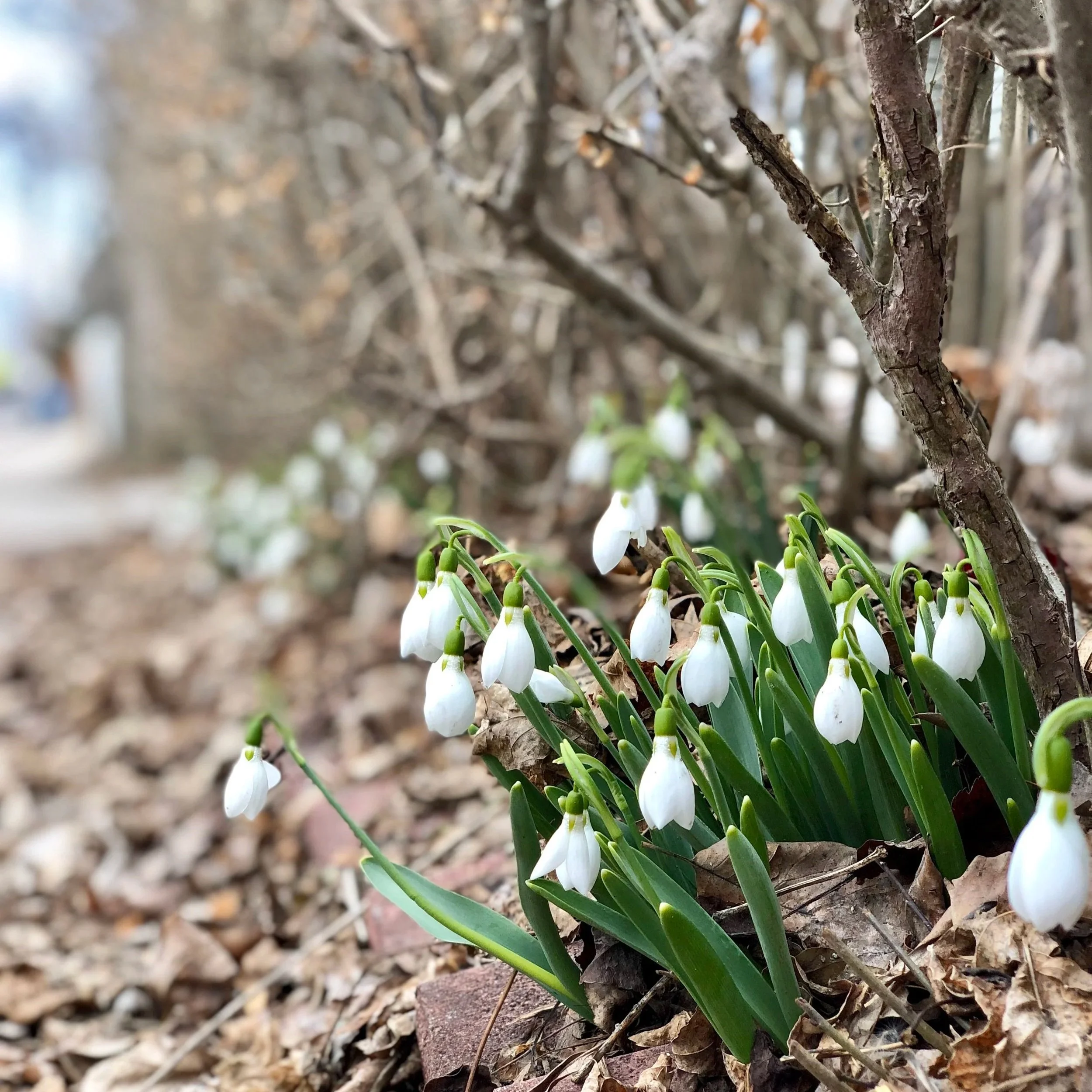
March arrives in Wisconsin with the promise of spring and the reality of mud. The snow, after months of doing the work of covering things up, begins its slow retreat. What appears underneath is not the tidy green of new growth — not yet — but weeks of exposed roots and flattened grass and everything that was lost to December and January and February, now returned to view. A glove. A child's ball. Branches you never saw fall.
I have always found this to be a fitting metaphor for what happens in relationships at this time of year.
Winter in a relationship isn't always hard. Sometimes it's actually quite good — the cocooning, the shared smallness of cold months, the warmth of evenings spent close together with nowhere else to be. But winter also tends to be a season of deferral. We are, in the cold months, often simply trying to get through. We move a little faster past the things we don't want to look at. We table the difficult conversation until things warm up. We promise ourselves we'll deal with it later, when there's more room, more light.
Spring comes. And the things we set aside are still there, right where we left them.
Why Couples Often Come to Therapy in Spring
In my practice, I see a reliable increase in people reaching out in late winter and early spring. I used to think this was mostly about the new year — the fresh-start energy of January bleeding into February and March. And that may be part of it. But I've come to believe it's also about something more basic: bandwidth.
In the compressed, darker months, many couples simply don't have the energy to face what's hard. The demands of the season — the holidays, the cold logistics, the general effort of being alive in winter — consume the resources that difficult conversations require. So things go underground. Not forgotten, exactly, but covered over.
When spring arrives, the covering begins to lift. The energy returns. And with it, the awareness of what was set aside: the money conversation that never quite happened. The resentment that was quietly accumulating. The loneliness that was easier to ignore when the schedule was full. The question about whether this is really what you want — the one you've been carrying for months without saying aloud.
The thaw doesn't create these things. It just uncovers them.
The Harder Kind of Spring
There's a version of spring in relationships that feels genuinely hopeful — the reconnection that comes after a long winter of being too tired and too busy to really find each other. Couples sometimes experience this as a kind of renewal: suddenly there's energy again for sex, for laughter, for the long Saturday morning conversations that got crowded out in December. Spring can feel like falling back in like with someone you love.
But there's another version. The one where the energy returns and with it, the clarity that something has been wrong. The one where the mud season reveals not just a glove or a branch, but something you'd genuinely been hoping to not find.
Both of these are real. Both deserve attention.
If you're in the hopeful spring — if you're feeling that reconnection — I'd encourage you not to take it for granted. It's worth pausing to understand what made the distance, and whether the conditions that created it will return next winter if you don't address them. Seasons cycle. The gap that closes in March can quietly reopen in November.
And if you're in the harder spring — if what's surfacing right now is difficult — I want to offer this: the fact that you can see it is not a sign that things have gotten worse. The thaw doesn't make the ground colder. It makes it visible.
What It Means to Look
One of the most important capacities in any relationship is the ability to look honestly at what's present — not catastrophize it, not minimize it, but actually see it. This sounds simple. In practice, it's one of the harder things we ask of ourselves.
Most of us have developed, over a lifetime, sophisticated strategies for not seeing the things that frighten us. We get busy. We get distracted. We find reasons to believe it isn't really that bad, or that it will sort itself out, or that raising it would only make things worse. These strategies are understandable. They are also, over time, corrosive.
What I find myself telling couples over and over is this: the conversation you've been avoiding is almost never as dangerous as the avoidance itself. The thing that's been underground for months has not lost its power by being unexamined. It has gained it. It takes up more room when it's hidden than it does when it's named.
Spring is a good time to name things.
A Few Questions to Carry Into the Season
You don't have to start with the most frightening thing. You can start small. Here are some questions worth sitting with — either privately, or together — as the season changes:
What have I been putting off addressing in my relationship? Is there a conversation I've been deferring until I had more time, more energy, more certainty?
Am I carrying something my partner doesn't know about? Not a secret, necessarily, but a feeling — a worry, a longing, a frustration that's been quietly building?
What do I need more of in this relationship that I haven't been asking for? And why haven't I been asking?
These aren't easy questions. But they are, in my experience, the ones that matter most. They're the ones that, when asked honestly, tend to lead somewhere real — even when the first few conversations are uncomfortable.
The Gift in the Mud
There is a stage in spring that comes before the beauty — before the green, before the flowers, before the warmth that makes you forget what winter was like. That stage is the mud. It is not beautiful. It is, frankly, a mess. But it is, if you're paying attention, full of information about what the ground has been holding.
Relationships have their own mud seasons. The weeks after a long winter when things are raw and exposed and not yet transformed into anything tidy. This is not a sign that spring isn't coming. It's a sign that the thaw is doing its work.
If your relationship is in the mud right now — if what's surfacing feels heavy or confusing or overdue — I'd encourage you not to push it back under. The covering-over didn't make it go away the first time.
Look at what's there. Give it some air. Find out what it needs.
Spring, in my experience, is very good at growing things — including the parts of relationships that have been waiting underground for the right conditions to emerge.